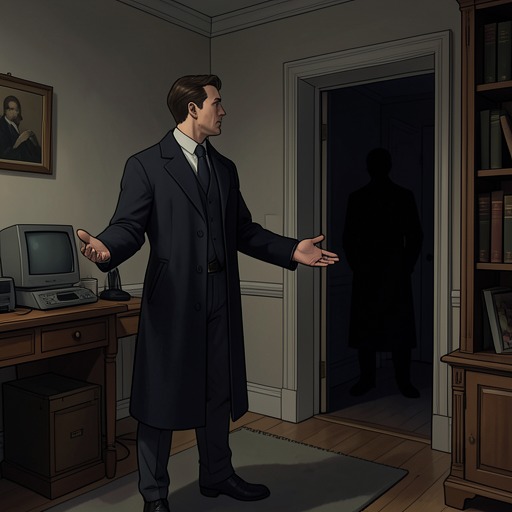
Pip's financial ruin
Great ExpectationsPip's financial ruin is the collapse of a life built around anticipated wealth rather than secure income. Debts and creditors eventually bring him to arrest, but the crisis also reverses his understanding of obligation: Joe pays the debt that frees him, and Pip spends years working to repay the money while recognizing that gratitude cannot be settled like an account.
Expectations and the Appearance of Capital
Pip’s financial history begins well before his creditors close in. When he first hears of his great expectations, he becomes dissatisfied not with the fortune itself but, as the older narrator later suspects, with himself. His unease surfaces as Joe and Biddy discuss his departure: their warmth feels to him like mistrust, although neither says nor signals anything of the kind. Wealth therefore changes his sense of home and his view of those who have cared for him even before it supplies reliable income.
The change has consequences for how Pip imagines money working. At the outset, Mr. Pumblechook presents a supposed opportunity in the corn and seed trade as a proposal requiring “More Capital”: a young gentleman could act as a sleeping partner, inspect the books, and take profits said to reach fifty per cent. The pitch links status, investment, and effortless return, but the evidence offers no indication that Pip invests in it. Instead, it shows how people around him treat his anticipated property as a source of capital and how his new standing encourages flattering claims of intimacy and trust.
In London, Pip and Herbert’s finances take the form of an accumulating private burden. They set out their liabilities on separate sheets headed “Memorandum of Pip’s debts” and “Memorandum of Herbert’s debts,” dated at Barnard’s Inn. Their records are assembled from scattered, damaged papers: some have been shoved into drawers, worn into holes in pockets, burned while lighting candles, or left in a looking-glass. The formal headings promise order, but they cannot make the underlying obligations disappear; the bookkeeping can feel almost as satisfying as payment without actually paying anyone.
Credit, Property, and Hidden Financial Flows
Pip’s choices reveal how uncertain his wealth remains. When he secretly finances Herbert’s entry into a merchant’s business, half of his five hundred pounds goes down at once, with further payments due from his income and others contingent on his coming into his property. The deal is negotiated through Wemmick and Miss Skiffins’s brother, and kept from Herbert until Herbert believes the business opening has arrived on its own. Pip can deploy money for a friend, but his commitments are divided between cash in hand, future income, and an inheritance whose security he does not yet understand.
Wemmick’s maxim about portable property offers a sharp contrast to Pip’s reliance on expectations. Wemmick accepts gifts of jewellery because they are curiosities as well as property that can be carried; he treats their portability as a practical safeguard. Pip, meanwhile, comes to possess jewellery and other articles that can be converted into cash, but only after his affairs darken. The contrast is not simply between saving and spending: Wemmick’s rule attends to what is actually in hand, while Pip’s gentility has been sustained by a fortune he cannot freely command.
Once he learns that his benefactor is a convict, Pip refuses to take more money from him while his plans and thoughts remain uncertain. He sends the unopened pocket-book back through Herbert to keep it safe, finding some satisfaction in not having profited from the benefactor’s generosity after the revelation. This decision separates Pip’s immediate need from his claim to another person’s resources, but it cannot resolve his existing obligations. His financial strain continues while he waits, uncertain and increasingly short of ready money.
Creditors, Arrest, and Joe’s Payment
As the months pass without a change in the situation, Pip is pressed by more than one creditor and begins selling jewellery he can spare for ready cash. He will not accept further money from his benefactor in the circumstances, even though his worldly affairs are growing gloomy. The refusal preserves a moral boundary, but it leaves him exposed to the ordinary claims of those he owes. Financial uncertainty becomes a daily condition, not just an anxiety about a distant inheritance.
The crisis reaches its decisive point in Pip’s arrest for debt. During his illness, he assumes that the creditor has withdrawn or suspended proceedings until he recovers. He has never imagined that Joe has paid the money. A receipt enclosed with Joe’s letter corrects that assumption: the debt and costs have been discharged, and the receipt bears Joe’s name. The rescue is concrete and documented, but its significance exceeds the amount paid. Pip had once treated his old home and its people as beneath his aspirations; now the person whose tradesman’s hands and working life he had been ashamed of has kept him out of prison.
Joe makes no display of the payment as leverage. His letter says that he has departed because Pip is well again and can do better without him, and closes by affirming their friendship. When Pip sees Joe after recovering, Joe and Biddy discreetly avoid dwelling on their childhood secrets. Their care and tact deepen Pip’s recognition of his own past conduct: as he grows stronger, he sees that Joe’s renewed distance arises from the reason Pip himself gave Joe to fear that prosperity would make him cold and cause him to cast Joe off.
Repayment, Work, and the Debt That Remains
Pip returns intending to acknowledge his failures and ask Biddy whether she can receive him despite them. He also offers to let her decide whether he should work at the forge, seek another occupation nearby, or accept an opportunity in a distant place that he had set aside pending her answer. The plan makes his future a choice of honest work and shared life, rather than a return to imagined gentility. He asks whether she can go through the world with him, hoping that the relationship would make him a better man; the evidence presented here records the purpose of this proposal, not its outcome.
In his farewell to Joe and Biddy, Pip promises to work for the money Joe spent keeping him out of prison and to send it back. He immediately qualifies the promise: even repaying the sum a thousand times over would not cancel a farthing of his deeper debt, nor would he do so if repayment could erase what he owes them. His distinction is essential to the meaning of the ruin. Money is measurable and can be earned again; kindness, loyalty, and the years of ingratitude that preceded his understanding cannot be settled by a receipt.
Pip sells what he owns, puts aside what he can for an agreement with his creditors, and receives ample time to pay them in full. He joins Herbert and leaves England; within two months he is a clerk with Clarriker and Co., and within four months he carries sole responsibility for the Eastern Branch while Herbert is away to marry Clara. His recovery therefore begins not with recovered expectations but with paid work, reduced means, and a business responsibility he has to shoulder himself.
Years pass before Pip becomes a partner in the firm. He lives happily with Herbert and his wife, lives frugally, pays his debts, and maintains constant correspondence with Joe and Biddy. Clarriker eventually reveals to Herbert that Pip secretly financed his partnership. Herbert is moved and astonished, but the long concealment does not damage their friendship. The firm never becomes grand or fabulously wealthy: it earns a good name, works for its profits, and does well. Pip’s later recognition that Herbert’s supposed inaptitude may have belonged to Pip himself completes the reversal. The financial ruin strips away the glamour of effortless status; what follows is a modest livelihood built through labour, generosity, and durable relationships.